
The moment we need to meet
An interview with Yvette Borja of Red De DefensAZ on the struggles of immigration detainees, the power they bring to the fight, and what citizens can do to show up in solidarity.

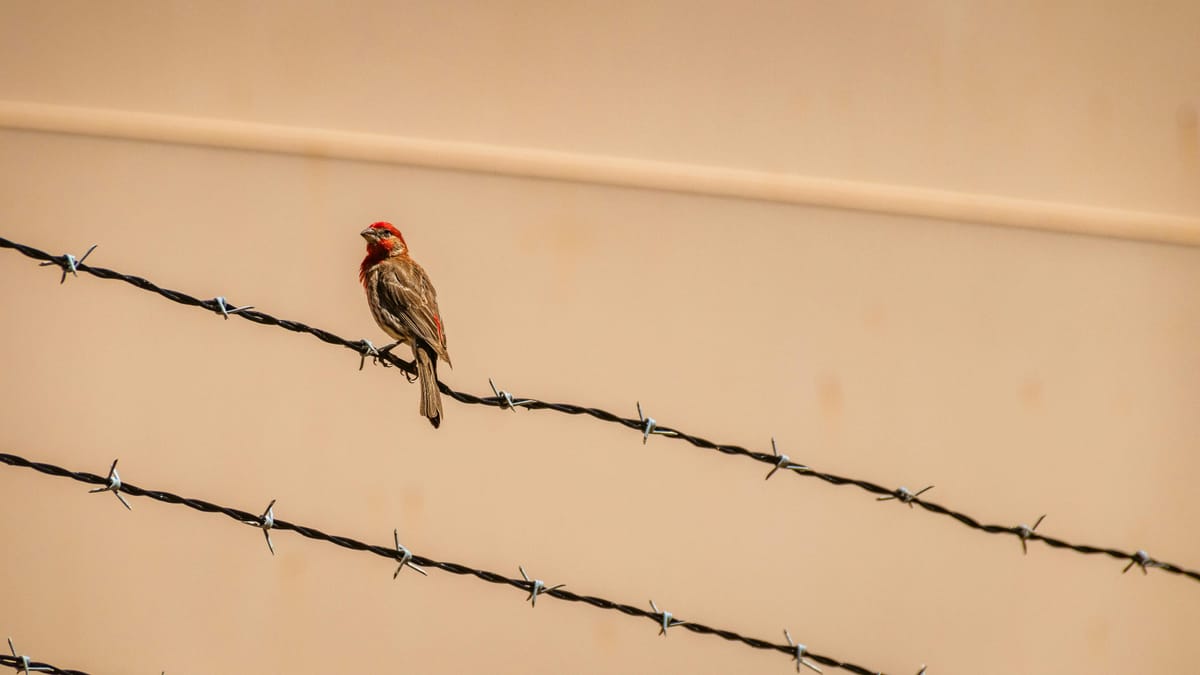
When you think of the horrors of immigrant detention during the past 30 years or so, you are very likely envisioning something like the Eloy Detention Center, about 60 miles northwest of Tucson.
It is one of the deadliest and most controversial ICE facilities in the U.S. Opened in 1994, during the first Trump administration it became one of the few locations detaining mothers and fathers following family separations at the border, and is one of 12 centers holding an average population exceeding 1,000 people. Everyone detained at Eloy is held in administrative, not criminal custody, meaning they are there only because they are immigrants or asylum seekers. Run by private contractor CoreCivic, it has been host to a litany of human rights abuses over the years, including preventable deaths, inhumane living conditions, and frequent suicide attempts, as documented by Detention Watch Network, Florence Project, and Trans Queer Pueblo.
"Complaints document issues including severe medical deficiencies, abuse by guards, lack of legal access, violations of disability rights, and egregious use of segregation, particularly for individuals with serious mental illness," according to their report.
In Arizona, Eloy is at the core of the violent U.S. system of cruelty toward immigrants that has grown increasingly powerful under recent administrations and Congresses controlled by both parties. Local efforts to challenge that system and help those within it are often focused on this detention center.
One group that is approaching this fight with the tools and perspectives of mutual aid—working in partnership and solidarity with those in need rather than providing paternalistic aid—is Red De DefensAZ, a band of immigration lawyers, mutual aid workers, and individuals and families who have been directly impacted by the immigration system.
The collective got its start surrounding the detention of a founding member, who we'll refer to as Ana (some names have been changed in this interview to protect the safety of those with pending immigration cases or cases that could be reopened). Ana fought her own deportation case for over 12 years, and was detained in Eloy multiple times. During that time, she and a group of people working on her case made contact with and began supporting other families in similar situations, and Red De DefensAZ began to take shape. Co-founders include mutual aid organizers Yari Ibarra and Emily Morel, and attorneys River Feldmann, Jeneva Parks, and Yvette Borja.
Borja is an immigration attorney currently serving as a Laura E. Gómez Teaching Fellow on Latinx People and the Law at UCLA. The daughter of Salvadoran asylum seekers, after attending Yale and Stanford Law and interning with Supreme Court Justice Sonia Sotomayor, Borja worked as an attorney in Arizona focused on border detentions, immigration, and civil rights. She is also the creator of the great podcast Radio Cachimbona, which tells the stories of migrant resistance and other social justice fights happening in the borderlands.
Borja spoke with me remotely from Los Angeles about the work of Red De DefensAZ, the struggles of immigration detainees, the power they bring to the fight, and what all of us can do to meet this moment.
You can follow Red De DefensAZ on Instagram, donate via Cash App at $reddedefensaz, and contact the group about getting involved at reddedefensaz@gmail.com
I like to start out by asking people a little bit about themselves. So can you tell me about your background and how you got involved in Red De DefensAZ?
Yeah, so I moved to Tucson in 2018 after graduating from law school, to work for the Florence Project as one of the attorneys in their legal orientation program, and saw a lot of things there that impact me still to this day. I became really motivated and invested in actually living out abolitionist values and trying to dedicate myself to shutting down this detention center. Eloy was one of the detention centers where I would do know your rights presentations, and it's just as horrific as you would think.
I met Ana soon after moving to Tucson. She's an important part of the story, and I would say that working on her legal defense team was the first iteration of us doing participatory defense together. It was us using Ana's case and her subjugation in the legal system as a community education, a political education tool to inform people of the late 90s laws that criminalize legal permanent residents like Ana and that made her deportable. And she shared her own story of coming to understand this.
In 2024, a group of us got together with this desire to accompany people through their detention and the deportation system, supporting family members of people who are detained, and amplifying their perspectives in these legal proceedings. And really doing what Ana did, which is take her own case and undergo a personal transformation that made her an abolitionist leader. And that's sort of the goal of Red De DefensAZ.
We started in 2024 with a pool party fundraiser, and I think that's a huge part of Red De DefensAZ too. We do these really heavy things, like we accompany people who are undergoing really intense state violence, and so our joy and creativity and healing is a necessary component to making that work sustainable. So the fundraiser pool party was part art auction, there was a DJ show, there was a raffle where people won a bunch of cool stuff like massages and Reiki sessions and cool books.
I think that's another example of what Red De DefensAZ is trying to do, which is community-build amidst these proceedings that are trying to really violently separate us, and rejecting that and creating the community that we want to see instead, in the wake of that.
Yeah I love that. And how long were you at Florence Project?
Just a year. I could only survive a year. It was like the hardest thing I've ever done. It was during the first Trump administration. I feel like I'm hardened now, maybe I could last longer, but at the time, I was like, this is the worst thing ever.
How does your work with Red De DefensAZ contrast with your nonprofit experience?
I feel like it's pretty much night and day. You know, sometimes I feel like I'm a little harsh on nonprofits, because I guess they do have legalities they have to abide by, but there are just certain things, like you couldn't personally give your client a ride after they'd been released from a detention center. It's something about creating an inappropriateness in the relationship, and necessitating this distinction between client and service provider in a way that I feel makes us have a one-dimensional perspective of the person that we're dealing with. Like their oppression is the only thing that we're allowed to interact with.
And there just aren't enough resources for how many people are there, so you're constantly nearly drowning. And because the organization is dependent largely on government funding, I think that they tread carefully and are noticeably not in any abolitionist spaces or coalitions or efforts, and I think that's because they have a direct stake in the government continuing to detain people. That's why I say I know that that's harsh, because I was a well-intentioned person there at the time, and would have hated to hear somebody say that about the organization I was part of, but there is just that undeniable reality.
And I feel like with Red De DefensAZ, we're able to see people in their full humanity and interact with them in their full humanity and actually community-build with them. We've helped a few families with releasing their loved ones from detention. There's been one person, Luis, who's been sort of a consistent presence. He's still fighting to get his wife, Sofia, out of detention, and he's now going to Red De DefensAZ meetings, an explicitly abolitionist space. And I think that's the goal of Red De DefensAZ, empowering directly impacted people so that they can share their stories and also recognize the strength that they embody just for surviving this intense state violence that they're going through.
Being able to interact with people in your full humanity is such a common thing that I hear in mutual aid, because I think a lot of people have experience in institutions or nonprofits and they're doing a certain kind of important work, but they feel like they're not their full human selves in it. I feel like when many people get into mutual aid and abolitionist spaces, it's the first time they really get to embody their values, their humanity, which is part of the reason it's so powerful.
But yeah, so maybe we can back up a little bit. When Red De DefensAZ started, what was your initial goal? What kind of programming were you doing, what sort of support were you giving? And how has that evolved since it started?
So from the beginning, a big priority was visitation for people who are detained at Eloy, and material support like commissary and sending books so that people can occupy their time. There's also another important person to mention in the story of Red De DefensAZ, which is Isabella. She's someone who was a critical inside organizer in the Shutdown Adelanto campaign [Adelanto is an ICE detention center outside of Los Angeles]. She was just reporting out the terrible conditions of that detention center. Instead of releasing her to her community in Southern California and the organizers who had been supporting her campaign, she was transferred to the Eloy Detention Center, and that's when Shutdown Adelanto organizers contacted Ana and asked if she could support Isabella. And in supporting her, that's where Red De DefensAZ really began. Isabella then referred Sofia to the visitation committee so that people could go visit her and support her.
So the idea is, people who go visit provide emotional and moral support and also let them know about what Red De DefensAZ does so we can support their legal case if that's something that they're interested in. Our goal is to support a lawyer that's already working on a case, or support a person who's unrepresented to get out of detention, whether that be through bond or winning their case, and then otherwise support the family needs that come up because someone is detained.
How does that support manifest? What are the different things you do for both families and for detainees?
I'd say fundraising has been a huge thing, because there are actually very few options for pro bono lawyers. So if people do want to fight with a lawyer, they need to pay a private lawyer who's charging thousands of dollars. And also, the legal filing fees are really expensive, and even applying for a work permit, ironically, is very expensive.
So people just need a lot of support, and they're not getting it from the government at all. And we support people with fundraising, but since everything we're doing is from a mutual aid perspective and not a charity perspective, we try and do things that are sustainable, long-term, and that empower the person we're working with.
For example, Flowers and Bullets holds a weekly market on their private property, which minimizes risk to the vendors that are there, and people are selling a bunch of stuff. We had one of the women we were supporting go—she's from Venezuela, and she's really good at making Arepas—and Red De DefensAZ paid for the ingredients for the food, and then all the profits went to her.
So just things like that. I feel like, especially if people are interacting with nonprofits, kind of related to what we were talking about, there's this victim relationship that gets created, like they're the person in need. We just like reminding people that they already have a lot of skills and knowledge and things that are marketable here in the US, including Venezuelan Arepas or Empanadas or whatever it is.
We also have an online presence, and so we're fundraising there. And since the group does have a few lawyers in it, it's also us trying to leverage our moneyed networks and privileged networks to give back. We encourage people, if you are upset about what's happening with immigrants, but you don't know what to do, just donate straight to Red De DefensAZ [Cash App $reddedefensaz], it will go to a good place. Especially since it's an all-volunteer effort. I feel like the larger a nonprofit grows, the more likely money will be spent on weird stuff that maybe you wouldn't have thought you were donating for. If you give us money, we are literally giving it to individuals and families.
So a lot of fundraising, and also helping people fill out their work permits, drafting asylum applications. It's the mutual aid piece, plus the legal support—whatever that person is looking for, whether that's connecting them with a private lawyer, or if they represent themselves, helping them make their materials as strong as they can be. Or collecting letters of support for someone who's trying to get out on bond. Everything is very case by case, but I think the overall way to describe it is a mutual aid plus legal support group.
Can you talk a little bit more about how you support families?
Yeah, so we meet every week via zoom, and we have what we call the Family Justice Hub meeting, and that's where family members of people who are detained can come and see how they can support the case. Because we believe that family members are untapped resources in deportation defense. What we've found is that a lot of defense lawyers don't even think that interacting with family members is beneficial to the case or worth their time.
So in the Family Justice Hub meetings, the magic really happens when someone who's successfully helped get their family member out is able to give counsel to someone who's still working through their family member's case. So in the meetings, the family member is encouraged to share their loved one's case, where it's at, and then if they have any specific questions, family members can share what they've learned.
That feeling of being isolated or invisible to the world must be so hard. Being seen by other people, and being able to see other people, I imagine, is huge.
That's what Ana said. That's one reason she wanted to start Red De DefensAZ. Because the first time she was detained in Eloy, she was there for two years, and she said that her mom didn't tell her family or friends where she was because they were too embarrassed. And I think that's a really common sentiment, and there's a lot of shame and internalized stigma, and people don't want to share when their loved one has been detained or incarcerated, for understandable reasons considering how our society talks about people in those situations.
So I think that is why this space is so powerful, and it is powerful to be led by formerly detained people, because it just shows them that there is a way out of this and Ana is a living example of how, not only will you get out of this, but you can help change other people's lives too.
What other sorts of needs do you see from families? What do people need when they're going through this?
There are so many things, honestly. There's basic stuff, like needing a ride to the ICE check-in appointment, needing someone to go with you to their ICE check-in appointment. I think also availability of work. I know people go to the Southside Worker Center to get jobs, and that's a very useful resource, but one of the people that we've been supporting hasn't been able to find consistent work. They're not making enough to survive day to day.
Probably the other important thing is that people have been through so much, even before starting their legal proceedings formally. Just the journey to get here and the reason they left had so much trauma. Not every single time, but a lot of times, there's a lot of trauma and violence that has been experienced by people who are coming here, seeking asylum or some type of legal relief. And I don't think that there are really any mental health resources for them.
I think about that a lot, because the secondary trauma also impacts even volunteers and people from Red De DefensAZ that accompany them. So it makes me think what they personally experienced must be so overwhelming. There are no resources, and it's actually a danger to try and seek public health care benefits at this time as an immigrant, because that can be used as a basis to deny you legal relief later, based on the public charge rules. So it's very bleak. I think more mental health resources, more therapists willing to provide these services for free to undocumented people or on a sliding scale, I think there's a huge need.
I hear a lot of parallels with unhoused populations, because the services that come from the city and nonprofits are very specific, and then they just end at a certain point and people get kind of spit out. Or they're stuck in this eternal limbo where they just can't get out, you know? And I imagine that's probably similar here, where you're not necessarily detained, you're not necessarily granted asylum, but you're kind of floating in this ether, which must be really scary and hard.
Because of the huge immigration case backlog, people's hearings aren't for another year, two years. And so, yes, they may eventually be able to get a work permit. But everything is a struggle. We fundraise for work permits too, right? So you fundraise for the work permit, and then you have to go and try and find jobs, you can't find a consistent one. Yeah, endless limbo is a great way to put it.
Well, let's see. I know this is really hard to do, and might be impossible, but what is the average case or person that you work with? A family you're dealing with or a detainee you're dealing with. What does their situation look like?
A lot of folks from Venezuela, young people, families. One of the families we're supporting is a middle-aged mother, a 19-year-old who's also a mother, and a little two-year-old baby, and they're all from Venezuela. We're also supporting someone who is actually stateless. They were born in Yugoslavia, which is no longer a country, and she has been detained a year post-deportation order at this point, because ICE hasn't been able to find a country willing to accept her, and so they just continue detaining her.
For people who have been facing prolonged detention, there are a lot of medical issues that develop because of medical negligence at Eloy, and also the terrible food and water that make people sick over time and all the other things that contribute to making people sick, like all the stress of being inside.
I don't want to dwell on it or sensationalize it, but I think people would want to know what it's like in detention centers. Maybe you can just talk a little about what the conditions are like there. What are people's lives like when you're detained?
The detention center is in the middle of this rural area in Eloy, and it looks just like a prison. Like a large, drab place of incarceration with metal fences and barbed wire, and these really heavy metal doors that don't open until someone opens them for you. It's a very intense experience to walk into the Eloy Detention Center for the first time. You walk up, and you have to state your name, why you're there, who you're there to see. You wait, you hear a beep, and then you're allowed to go in. And then there's another door that you have to wait to go through. And you're standing there waiting. You say the same thing. Then you'll get let in.
There are so many arbitrary rules you have to follow, about dress and what you can bring in. You can't bring people food, even though that would be so lovely, because one huge thing people complain about is the really terrible food. They're even strict about how much paper you can bring in. It's almost like they're trying to intensify the misery, make it the most miserable experience for everybody there. It's honestly scary, it's anxiety inducing. A lot of times it would just cross my mind that I had to have faith that the people there would let me out.
Obviously, they always would, but it crosses your mind that you're in this place that's so deeply surveilled. And then the visitation room is this decently sized room with two private rooms. Well, they're allegedly private, if the guards walk by, they can hear what you say. Those are supposed to be for attorney consults. And then there are plastic chairs and little plastic tables where people can sit. The latest that we've heard from people who go visit is that the guards don't let you hug the person detained anymore. You used to be able to briefly hug people, hello and goodbye. There are always rules like this. They police the smallest thing so that, if you're there as a visitor, you also get policed.
What we hear about the food is that it's not nutritious, that often things are expired. There have been reports of maggots in the food.
And the medical care I hear is really bad, too. So if people have medical issues, they're not getting the care they need.
Exactly, it's a nightmare if you're someone who has a pre-existing condition. But then also, I've just noticed that people's health really deteriorates while they're in there.
Can you talk a little bit about the demand that you've seen since Red De DefensAZ began?
There's so much need. And that's why we're trying to grow our capacity and have more volunteers. Because especially being connected to other activist groups, a lot of times we get people who have been transferred to Eloy and are being referred to us.
So I think at any one given time, I think we're probably supporting like three families, and we're a group of 10-ish people. I guess it's partially because it's nobody's full-time job, but that's the level of support that three families need, because what they're struggling with is a lot. Even for people who are resourced and educated, what people are going through is a lot.
What's the mix of volunteers? What kind of folks do you have helping out?
It's a mix of directly impacted people, like people that have been detained before, people that are currently fighting a deportation order, or people like Luis who are family members of someone who is in that position. There are a few lawyers like myself that are either deportation defense lawyers or criminal defense lawyers. And then there are a lot of mutual aid folks too, folks from Community Care Tucson are involved. Folks from Mariposas Sin Fronteras are involved. So it's a lot of mutual aid folks and folks who are very connected to the activist community.
I would also add that we're multi-generational. Ana always brings her baby to the meetings. And we have a volunteer who brought her nephew to the retreat, he's eight or seven, and he messaged her on Roblox after to say that he loved the day with us. So it's truly a mix of people, but I think everyone has interacted with the immigration system in some way before, and that's what brings everyone together.
You talked a little bit about this already, but how important is that? What does it bring to the work to have people who are directly impacted by the immigration system?
I mean, I think that's why we're an abolitionist organization, because for us, as people who are led by people who have directly suffered the conditions of the Eloy Detention Center, we know that there's no other option but to abolish that institution and to grow something new within it. And I think that's been one critique of the legacy immigration nonprofits, that a lot of foundation and philanthropy money has been given to big national immigration nonprofits, and at the end of the day, there has been no comprehensive immigration reform, or honestly, any kind of reform that's pro-immigrant.
I think there are many complicated reasons for that, and of course, you couldn't say that it's only this group of people, who have indeed dedicated their lives to fighting for immigrants' rights. But I just think something I notice as a difference between, for example, a meeting of nonprofit immigrant rights leaders versus a directly impacted space is the urgency of needing some type of systemic legal reform, the urgency of shutting this detention center down. I think the urgency, and then also, in policy spaces the knowledge gleaned from directly experiencing something like detention or deportation is undervalued. But what I've found is that perspective is what will most effectively allow us to combat these anti-immigrant laws.
I feel like many things have been missed in the reform conversation that I've come to understand by working with directly impacted people, stuff like the fees and fines that you have to pay when you're incarcerated, restitution as one thing, but even everything you have to pay for commissary, how you have to pay for the use of a tablet. In Eloy, you have to pay for phone calls to reach anybody you know on the outside. And these are things that people who are struggling to survive think about because that means, oh, I'm not gonna be able to talk to my loved one anymore because I can't afford to pay for that phone call. And I guess, because I want to approach this from a human perspective, that's what I care about most. Their priorities are the priorities that I want to have.
And you mentioned a big goal is to sort of build the movement of people who are invested in abolition. How does the mutual aid and legal support component build up to abolition as the final goal?
For Red De DefensAZ, political education is super important. We just had a strategic retreat a few weekends ago, and we started off the day by doing political social analysis, where everyone went around and shared different ways in which they're identifying authoritarianism and fascism in our current society. A huge part of our work in our meetings is to try and increase people's social consciousness, because I think that's actually a part of the empowerment.
In breaking the isolation that the detention and deportation system imposes on people, they're able to see, oh, you know, the reason that I'm in this really fucked up situation isn't actually a personal moral failing of mine. It's actually these systemic, structural things that are affecting a lot of people around me, including this person who's at this meeting with me. And I think that consciousness-raising then allows people to develop into abolitionist leaders.
Having an abolitionist perspective is not a requirement to be a part of Red De DefensAZ, and it's not a requirement to be a family member that we help or someone that we support through their proceedings. But that is our angle and perspective, and that is how we share and conduct our meetings, and it informs all the steps that we take. So the goal is that, through this loving work, people also become more comfortable with the idea of abolition and get on board with it.
I think there is a lot of discourse right now about abolish versus reform, as there always is. So I kind of wanted to give you an opportunity to make your case for why the system needs to be abolished versus tweaked or improved.
I mean, immigration detention doesn't need to exist. When people are released, the vast majority of immigrants still attend their court hearings. The basis of detaining people is that they're a flight risk, that they won't show up to their court hearing, or that they're "a danger to society." And the data shows that people still go to their court hearings.
And I think it's incorrect to subject people to double punishment. The people who are detained post-criminal conviction are suffering double punishment. They've already served their time, so what you're saying is, just by virtue of them not being born in this country, you think that they should be subjected to this additional punishment for the same conduct. That's unfair.
I think the dehumanizing rhetoric of Trump has got us to this place where people believe that all immigrants are dangerous and so they should be detained, and it's just simply not true. And I think Eloy is a really good example of a county government that saw detention centers as a way to improve their economy, and I don't think that's true. The jobs that have been created are not great jobs. They don't pay that well, and they also cause a lot of trauma.
I really appreciate the abolitionist framework, because it allows us to think about what can be created instead. Instead of fixing a broken thing, why don't we think about what we can create anew that is divorced from this thing that is so problematic that it can't be reformed. I want Eloy to have a thriving economy, and I believe that it can, and I also believe that it doesn't need to be detention center-related. And I think the people that profit most off of places like Eloy are actually the stakeholders, like CoreCivic and GEO. It's not the everyday guard that lives in Eloy.
So, yeah, I think a better future is completely possible if people just allow themselves to be uncomfortable and think about, what could this space be? What else can we create here? And what do we want to see here? What do we want Eloy to be about?
What would you want people to know about folks who are being impacted by the system right now that they may not know? Whether it's their hopes and dreams, or challenges they've been through.
There's no one who loves America more than a recently arrived immigrant. Sometimes I even get emotional hearing them talk about this country because they hold it in such high regard. It's treating them like shit. It's subjecting them to the worst legal violence and awful, dehumanizing rhetoric, and they still believe it to be this place of freedom and opportunity, and that's the only thing right now that's making me think that's a possibility in the future for this country.
Just the fact that they believe it's possible.
Yes!
The people who are treated the worst by this country.
Yeah, so that's something I've noticed. Even Luis, who is still battling, trying to get his wife finally out of detention. At the retreat, he said, you know, this beautiful country, it is so beautiful. I think there's a lot of disillusionment, and I feel it myself deeply. So I guess that's something people should know, because I think there's this anxiety about immigrants coming and being anti-American, but truly, they're so deeply patriotic in ways that a lot of citizens are really not.
Can you tell me a story of a person or a family that maybe you're really proud of the work that you all did with them?
I think the story that makes me the most proud is us working with Jen. Jen is a young Venezuelan woman who ended up in Eloy Detention Center after being in an abusive relationship. She was experiencing domestic violence. Called the police seeking help, and instead of receiving help, because of Arizona's dual arrest laws, she was taken to the Eloy Detention Center. She had already filed an asylum application, but now, because she experienced this interaction with law enforcement, she had to fight her deportation while being detained. She had one bond hearing unrepresented, and she lost the case because the judge looked at the pending domestic violence charge and said she was a danger to society.
Isabella referred Jen to us, said, hey, this is someone who needs a lot of help. She doesn't have family here. She just got here from Venezuela. And we contacted another abolitionist organization called Survived & Punished, who do a lot of work uncovering how the criminal legal system ends up criminalizing survivors. Even though there's a lot of discourse around the criminal legal system protecting people from violence, the perspective of people who experience domestic violence is that they actually end up being criminalized themselves. And so we had them write a letter explaining that to the judge, and explaining the background around dual arrest laws and why they're problematic. And then we got a bunch of bond letters of support. And Survived & Punished said that they would provide her support and services upon getting out. And we found her a sponsor, which is a requirement to be let out on bond.
That's strange.
It's ridiculous, because it puts people like her who are recently arrived in a really hard situation. But they found a U.S. citizen willing to be her sponsor, and then had her resubmit the bond hearing request. The judge let her out with a $6,000 bond, and then we contacted a national bail fund to get her bond paid. And then she got out. She's living in the Phoenix area now, and she's just waiting for her her asylum date.
So yeah, I was proud of that. But it also just shows, it's ridiculous how many resources we had to put in to get this person out who really shouldn't have been there in the first place. She's 19, and she looked really young too. It was sad that she was in that situation, and really an example of re-victimization. She's victimized by this person, and because of that, had to suffer this. But we got her out, and I'm proud of that.
I want to get to a close here, but I suspect a lot of folks who are looking at social media or TV feel kind of powerless right now. They see things happening, like armies of men with weapons in their neighborhoods, and they're like, what can I possibly do about this? What would you say to folks about what they can do? What is the world that we're in right now demanding of people?
I'll just say that there are so many different ways to plug in to support immigrants, and it doesn't always look like confronting an agent at a protest. The mutual aid stuff that I mentioned is hopefully a lot more approachable than a confrontation with an ICE agent. Giving someone a ride to court, giving someone a ride to their ICE check-in, accompanying them to their ICE check-in. That might be intense, but I do encourage citizens to make themselves uncomfortable. You know, the meaning of what this country stands for is being fought right now. And I think if people want this to be a country that supports immigrants, they are going to have to do things that make them feel uncomfortable. That's the moment that we need to meet.
But that being said, the thing that you imagine to be the most impactful might not always necessarily be the most impactful. So cooking for folks can be a great way to support people. Being someone that's a resource for people to check in with whenever they want.
And also donating. If you're someone with money, but maybe the activism is too uncomfortable, donate to a group like Red De DefensAZ. Also educate yourself on the history of immigration law. Read Migra! by Kelly Lytle Hernandez. Read Border and Rule by Harsha Walia. Read The Case for Open Borders by John Washington. Talk to your family members that maybe aren't on the same political page as you, so other people don't have to.
There are so many different ways you can plug in. And I just think it's not an excuse to say you're scared. I always look to the undocumented folks in Red De DefensAZ as inspiration, because if they're determined to keep going, I have to be determined to keep going as well. I understand your fear, but if people who are in it who have it worse are still continuing on, you need to too.
OK one more question. You mentioned how this can be hard and traumatic for people who are involved in the work. What do you do to keep yourself sane, find joy? Or is there anything helping you keep it together these days?
This might be kind of corny, but I live in LA now, and so I don't get to be with the Tucson folks all the time. But I was able to recently for the retreat, and there's something about Tucson, the spirit of it, and the spirit of the people who live there and support immigrants, like, they're the best of this country.
I just feel like it's such a dedicated group of people, and the narrative of the borderlands always pisses me off, because the story is always that the people at the borderlands are overwhelmed, that they don't want immigrants anymore, and they're anti-immigrant. I've only experienced the opposite of that in Tucson, and I just wish more people knew that. That border communities are so loving and welcoming and have a long history of welcoming immigrants—and are really good at it.
Great note to end on. Thank you Yvette, it's been so nice talking to you.
OK there you go, pretty good stuff right? I want to thank Yvette so much for taking the time, and all the other folks at Red De DefensAZ for allowing me to share their story. Check them out, and if you're not in Tucson, there's a very good chance there is a group near you doing similar work.
Until next time, hang on tight. Listen to Bad Bunny. Tira más fotos. Da más besos y abrazos.
Tate